
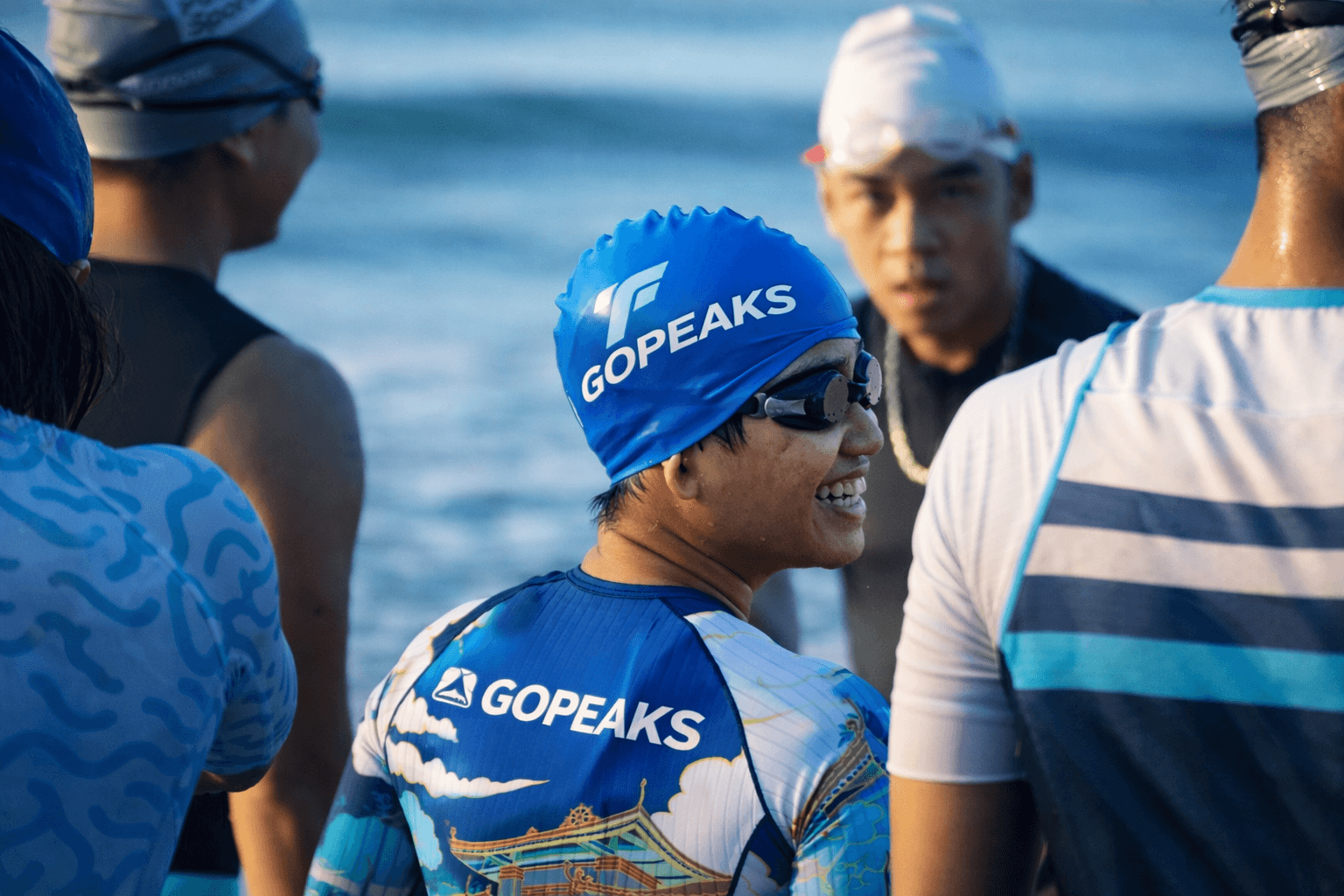
Managing Race-Day Anxiety
A Sports Psychology Guide for Endurance Athletes
Endurance athletes—whether they are triathletes, cyclists, or runners—share one universal experience before an important race.
Anxiety.
The morning of race day, you wake up and notice the signs:
your stomach feels unsettled
your heart rate is slightly elevated
your hands feel a little shaky
your mind keeps replaying the race ahead
You begin asking yourself questions:
What if I blow up halfway through the race?
What if I can’t hold my pace?
What if something goes wrong?
These feelings are completely normal.
In fact, anxiety is part of the biological system that prepares humans to perform under pressure.
The real question is not whether you feel anxious.
The real question is:
What do you do with that anxiety?
You can allow it to sabotage your race.
Or you can turn it into the energy that drives your performance.
In modern sports psychology, coaches often rely on three core tools to help athletes manage race-day anxiety:
Visualization
Reframing
Race-day routines
This guide explains how these tools work and how endurance athletes can apply them effectively.
What Is Anxiety?
Before learning how to manage anxiety, we need to understand what it actually is.
From a physiological perspective, race-day anxiety is largely driven by one ancient survival mechanism:
The Fight-or-Flight Response
When your brain senses that something important is about to happen, your sympathetic nervous system activates the fight-or-flight response.
This triggers a cascade of physiological changes:
adrenaline increases
heart rate rises
blood flow shifts from digestion to muscles
reaction speed improves
This is why athletes often experience:
dry mouth
butterflies in the stomach
increased heart rate
Your body is preparing for one thing:
Performance.
These sensations are not signs of weakness.
They are signs that your body is getting ready to perform at its highest level.
The Biggest Mistake Athletes Make
Many athletes try to eliminate anxiety completely.
That goal is unrealistic.
Anxiety itself is not the problem.
The real issue is how you interpret it.
Consider two athletes standing on the start line.
Both experience:
elevated heart rate
adrenaline
nervous energy
Athlete A thinks:
“This is bad. I’m too nervous.”
Athlete B thinks:
“Perfect. My body is ready.”
The physiological response is identical.
But the interpretation is completely different.
And that difference often influences performance.
Visualization: One of the Most Powerful Mental Tools
One of the most effective techniques in sports psychology is visualization.
This method is widely used by:
Olympic athletes
professional endurance athletes
elite performers in many disciplines
Why Visualization Works
The brain has difficulty distinguishing between vivid imagination and real experience.
When you visualize an event in detail, many of the same neural pathways activate as when you actually perform the action.
In other words:
You can rehearse performance inside your mind.
How to Practice Visualization
A visualization session does not need to be long.
Five minutes is often enough.
Follow these steps.
Step 1: Find a quiet space
sit or lie down comfortably
close your eyes
eliminate distractions
Step 2: Picture the start line
Create a detailed mental image of the race environment.
Imagine:
the race venue
the atmosphere
the other athletes around you
Step 3: Engage all your senses
Visualization is most effective when it includes multiple sensory inputs.
Think about:
how your hands feel on the handlebars
the rhythm of your breathing
the sound of shoes hitting the pavement
Imagine:
sunlight on your face
the smell of the road after rain
the sound of the crowd
The more vivid the experience, the more powerful the effect.
Building Automatic Responses
When you repeatedly visualize a positive reaction to race situations, your brain begins forming automatic neural responses.
For example, imagine that every time you visualize the start line you:
take a deep breath
relax your shoulders
smile
Over time, this becomes a habitual response.
Instead of panic, your body learns to respond with composure.
Visualize the Worst-Case Scenarios Too
A common mistake athletes make is only visualizing perfect race scenarios.
But racing rarely unfolds perfectly.
Elite athletes also visualize potential problems and how they will handle them.
Examples include:
missing a feed station
a flat tire
losing equipment
extreme heat
One famous example comes from swimmer Michael Phelps.
His coach regularly had him visualize swimming without goggles.
At one Olympic race, water filled his goggles and he could barely see.
Yet he still won the race.
Why?
Because he had mentally rehearsed that situation many times.
The Individual Zone of Optimal Functioning (IZOF)
Sports psychology recognizes an important concept known as the Individual Zone of Optimal Functioning (IZOF).
This idea suggests that every athlete has a unique emotional state that leads to peak performance.
There is no single correct mindset.
For example:
Some athletes perform best when they feel:
relaxed
happy
playful
Others perform best when they feel:
aggressive
intense
highly focused
The key is discovering your own optimal mental state.
Finding Your Optimal State
Think back to your best races.
Ask yourself:
How did I feel before the race?
What was my internal dialogue?
What emotions were present?
Some athletes thrive on self-talk like:
“Let’s go. Push harder.”
Others perform better with calm reminders:
“Stay relaxed. Execute the plan.”
Neither approach is universally correct.
The goal is finding what works for you.
Reframing Anxiety
Reframing is a mental technique that helps athletes reinterpret emotional reactions.
It starts with a simple question:
Why am I feeling this way?
For example:
You feel anxious before a race.
Instead of thinking:
“I’m nervous.”
Ask:
“Why am I nervous?”
The answer may be:
because the race matters to you
because you believe you can perform well
Suddenly, anxiety becomes a positive signal.
It means the moment is meaningful.
Understanding Your Motivation
Athlete motivation typically falls into two categories.
External motivation
prize money
recognition
expectations from others
Internal motivation
enjoyment
passion for the sport
the satisfaction of improvement
Research consistently shows that intrinsic motivation is more sustainable.
When elite athletes are asked why they compete, one answer appears frequently:
Fun.
Enjoyment is one of the strongest drivers of long-term performance.
Do Not Define Yourself by Results
Another psychological trap athletes fall into is defining their identity through race outcomes.
Sport may be an important part of your life.
But it should never be your entire identity.
Even the greatest athletes lose regularly.
A top professional sprinter might win 50–60% of races.
Which means they lose nearly half the time.
Defeat is part of sport.
Building a Race-Day Routine
One of the most powerful ways to reduce anxiety is establishing a race-day routine.
A routine is a sequence of actions that helps make race day predictable.
For example:
breakfast at 4:30 AM
gear check at 5:00 AM
warm-up at 5:30 AM
Routines help reduce uncertainty and create a sense of control.
Routine vs Superstition
It is important to distinguish routine from superstition.
Superstition is believing:
“If I don’t wear my lucky socks, I will lose.”
Routine is about controlling what you can control.
For example:
preparation
equipment checks
warm-up timing
Routines Must Remain Flexible
A good routine must also allow for flexibility.
If routines become too rigid, even small disruptions can create stress.
Unexpected events happen in racing:
a flat tire
delayed check-in
weather changes
Athletes should mentally prepare for these possibilities.
Visualization can help athletes remain calm when problems occur.
Periodizing Mental Training
Just like physical training, mental preparation benefits from periodization.
Early season
Visualization sessions are:
frequent
short
Closer to competition
Visualization becomes:
less frequent
more detailed
As race day approaches, mental rehearsals should resemble the real race as closely as possible.
Anxiety Can Be an Advantage
Many athletes believe they must be completely calm before competition.
However, research shows that moderate psychological arousal often improves performance.
If arousal is too low, athletes may lack energy.
If it is too high, they may lose focus.
The goal is finding your personal optimal zone.
Final Thoughts
Every endurance athlete experiences anxiety before competition.
But anxiety itself is not the enemy.
It is a signal that:
the event matters
your body is preparing to perform
With the right tools, anxiety becomes an advantage.
Those tools include:
Visualization
Reframing
Race-day routines
Understanding your personal motivation
When used effectively, anxiety transforms from a threat into performance energy.
And when you step onto the start line, that energy can help you perform at your best.
If you are an endurance athlete preparing for an important race, remember:
The nervous feeling you experience before the start line is not a sign that you are unprepared.
It is a sign that you are about to step into a moment that truly matters.