
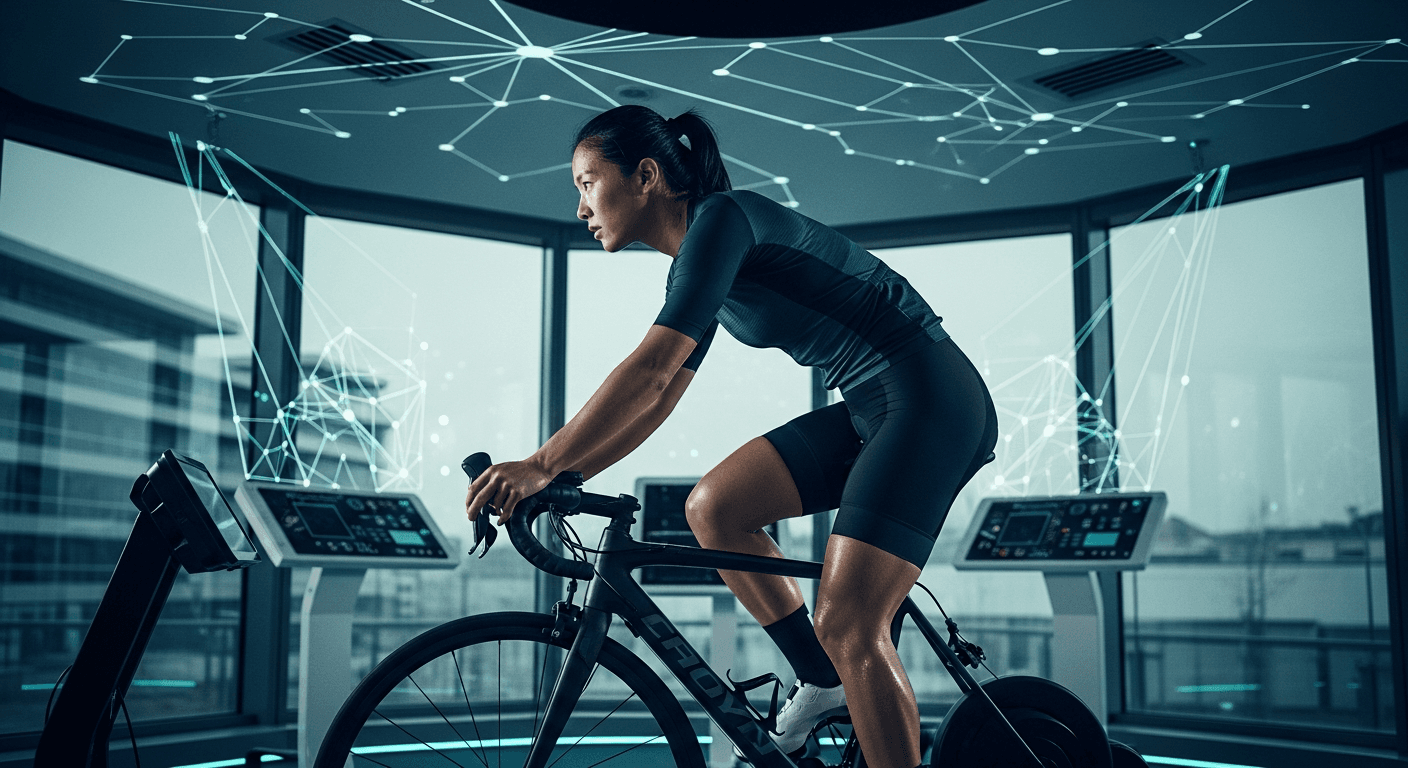
AI in Endurance Coaching: How Artificial Intelligence Elevates Training Prescription and Athletic Performance
AI in Endurance Coaching: The Performance Revolution
Over the past decade, endurance sport has entered the data era.
We now measure everything:
Power
Pace
Heart rate
HRV
TSS
CTL / ATL
Lactate
VO₂max
Running economy
But data alone does not create performance.
Data only becomes powerful when interpreted correctly.
This is where AI changes the game.
We are entering the era of AI-augmented endurance coaching — where artificial intelligence does more than collect metrics. It analyzes, predicts, adapts, and learns from the training process itself.
This is not a future concept.
This is happening now.
From Sports Science 2.0 to 3.0
Sports Science 2.0 focused on:
Measurement devices
Storage platforms
Analytical dashboards
But more numbers do not guarantee better decisions.
Sports Science 3.0 is:
Data + Interpretation + Intelligent Real-Time Decision-Making
AI does not simply display TSS.
It predicts when TSS becomes overload.
AI does not just detect HRV decline.
It asks whether that decline stems from psychological stress or accumulated intensity.
The difference is interpretation.
1. From Data Collection to Intelligence
Modern AI integrates:
Large Language Models (LLMs)
Retrieval-Augmented Generation (RAG)
Behavioral machine learning
RAG allows AI to reference validated scientific sources instead of random internet aggregation.
This ensures:
Scientific integrity
Consistency
Reduced misinformation risk
Professional coaching demands this level of precision.
2. Intelligent Load Monitoring
Overtraining accumulates.
AI can:
Compare recent training blocks
Detect abnormal patterns
Predict overload risk before injury
If power remains stable while HRV trends downward and RPE rises, AI can recommend proactive load reduction.
This is preventive coaching.
3. Adapting to Real Life
Traditional plans are rigid.
AI can:
Reschedule sessions automatically
Scale intensity during fatigue
Adapt weekly volume based on availability
Training must coexist with real life.
AI preserves periodization logic while allowing flexibility.
4. Garbage In, Garbage Out
AI is only as good as the data it receives.
Faulty GPS, incomplete sessions, inaccurate thresholds distort outcomes.
Therefore:
Audit data regularly
Validate performance metrics
Recalibrate zones when needed
Clean data empowers intelligent systems.
5. AI Does Not Replace Coaches
LLMs can generate plausible but incorrect responses.
AI is a performance accelerator.
The coach remains the final decision-maker.
Coaches provide:
Psychological insight
Technical observation
Strategic planning
6. Physiological Personalization
True personalization includes:
Recovery capacity
Intensity response
Fatigue patterns
Peak timing
Over multiple cycles, AI builds a dynamic physiological profile of the athlete.
7. AI as a Performance Amplifier
AI does not create discipline or motivation.
But it can:
Reduce training errors
Optimize workload
Increase consistency
And in endurance sport, consistency drives peak performance.
The Future of Endurance Coaching
Within the next decade, AI may:
Automatically adjust thresholds
Predict peak form windows
Detect injury risk before symptoms
Yet coaching intuition remains irreplaceable.
Coaching is an art grounded in science.
AI strengthens the science.
The coach protects the art.
Final Thought
The new era is not AI versus humans.
It is:
Human + AI
Delivering performance levels neither could achieve alone.